
Previous team project
Rolling Sagas
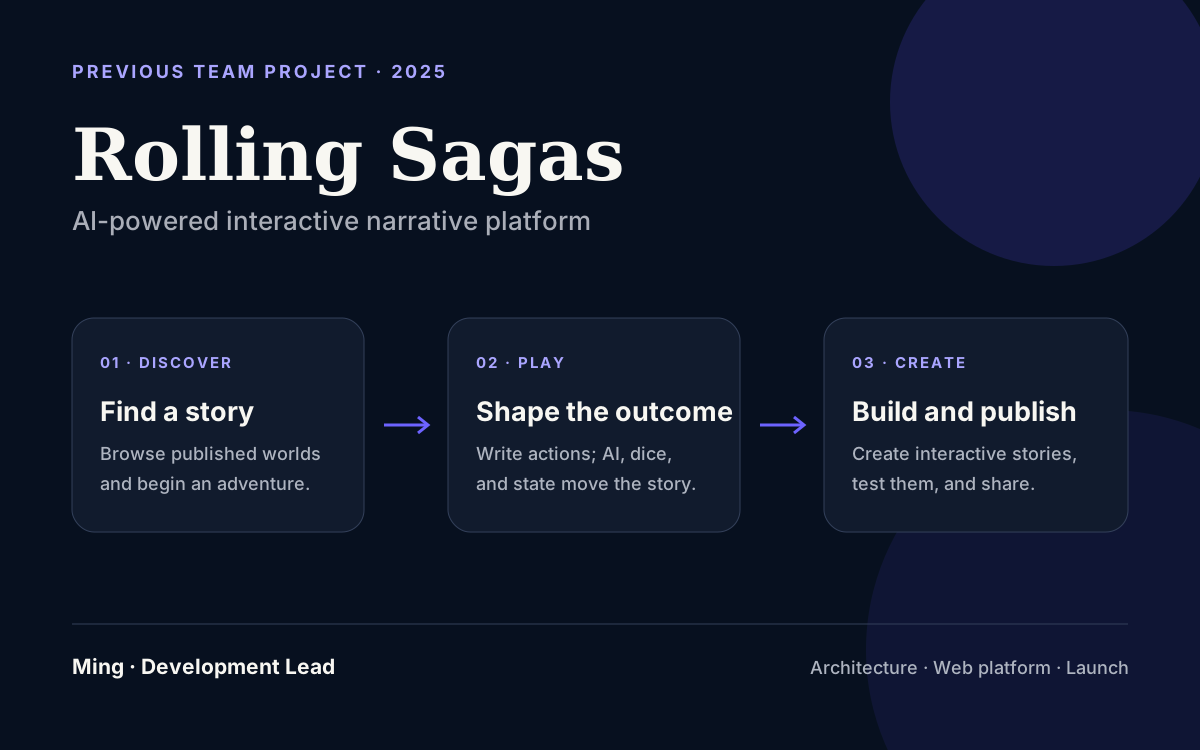
An AI-powered web game platform where players experience evolving narratives and creators build and publish interactive stories.
- Type
- AI interactive narrative platform
- Year
- 2025
- Ming’s role
- Development Lead
- Ownership
- ROLLINGSAGAS PTE. LTD.
Context
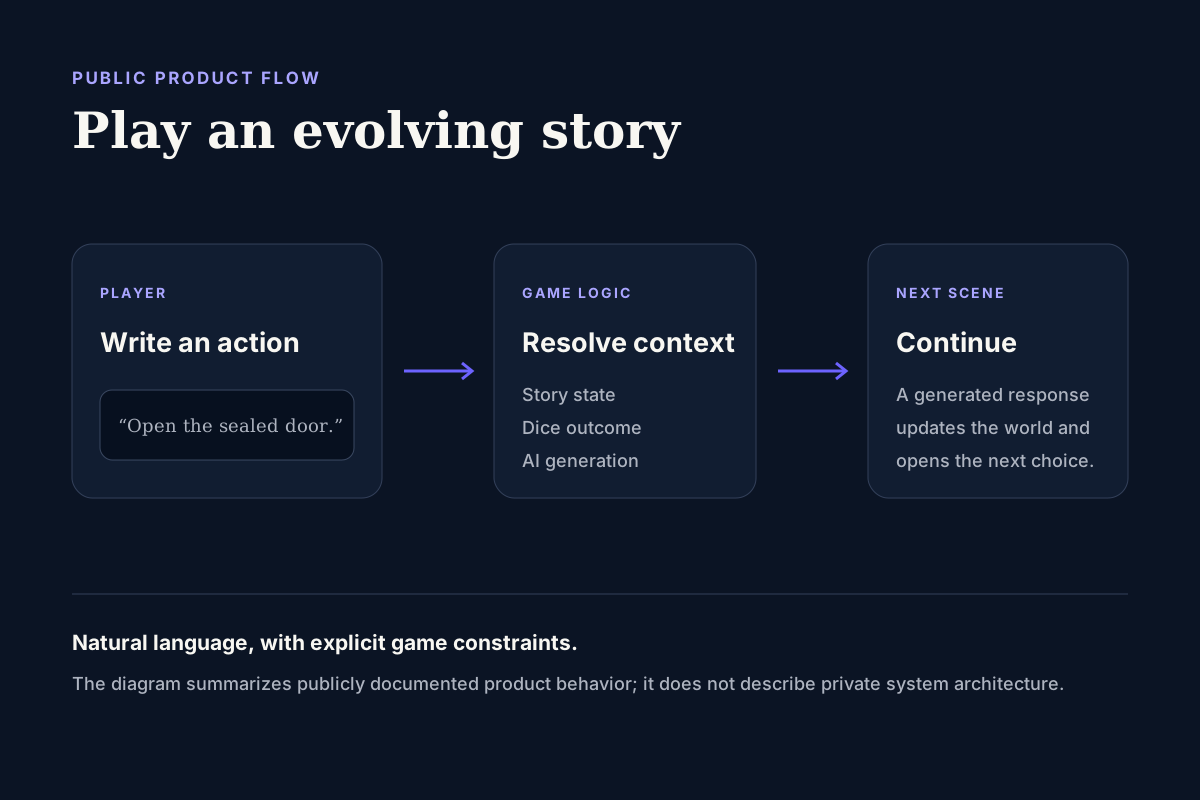
Rolling Sagas is an AI-powered interactive narrative product built for an international audience. Players enter published worlds, write what they want to do, and move through generated scenes shaped by story state and dice-based outcomes.
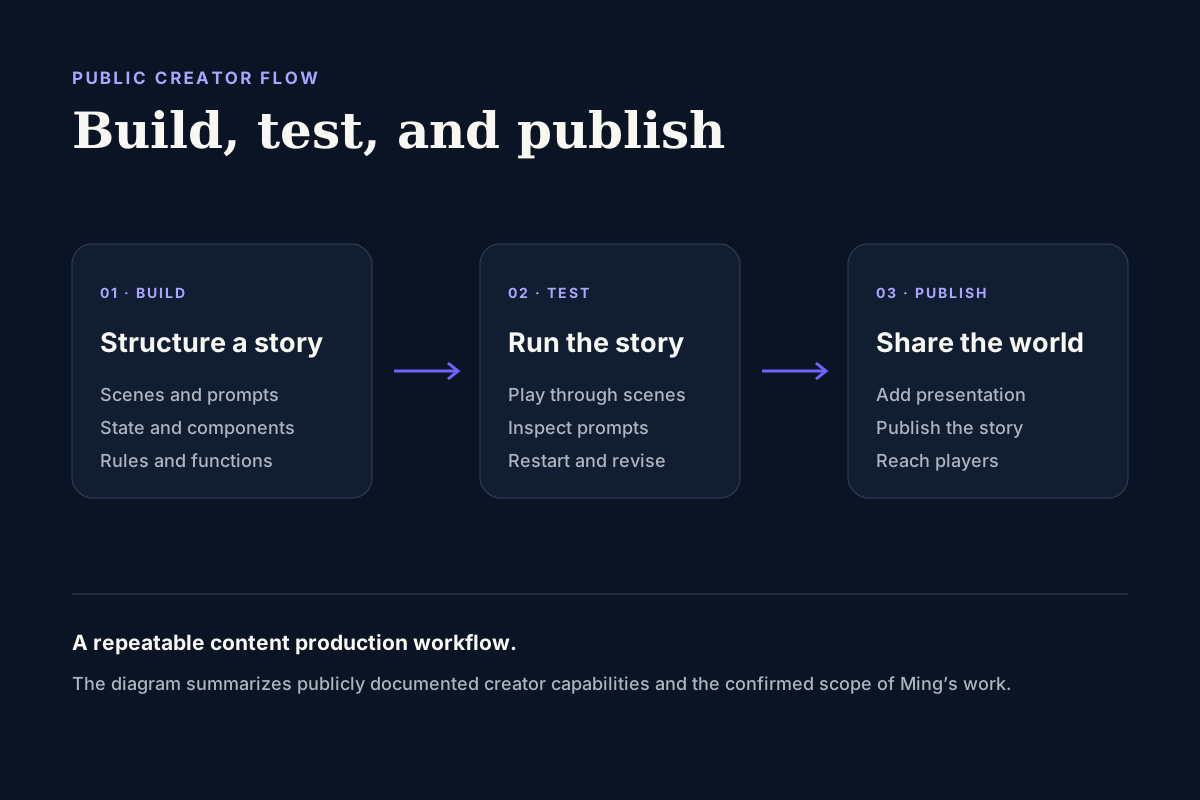
The platform also gives creators a way to structure, test, and publish interactive stories. That made the web product more than a chat interface: it had to connect a player-facing runtime, narrative rules, AI generation, persistent progress, and a practical content production workflow.
This case study describes Ming’s individual responsibilities within the team. It is presented as previous professional work, not as an Omrylo product.
Goal
The immediate goal was to take the web platform from zero to launch. Players needed to discover a story, begin or resume a session, submit actions, and understand how the story responded. Creators needed a separate workflow for building and publishing the content behind those experiences.
A successful implementation had to make generated narrative feel open-ended without losing the structure expected from a game. It also had to give the team a maintainable way to create, test, and release stories rather than encoding each experience directly in the client.
Role and responsibilities
Ming served as Development Lead, responsible for web architecture, core experience development, and launch delivery. His scope covered the web game client and interactive text interface, a JavaScript state machine for chapter progression and branching narratives, AI generation integration, and a CMS for script editing and content publishing.
He also contributed to AI API maintenance and system deployment. The work required connecting product behavior, creator needs, frontend architecture, and release concerns across the path from the first implementation to a usable public platform.
Rolling Sagas was built by a team. The role description identifies Ming’s confirmed contribution without claiming sole authorship of the product or the work of other team members.
Key engineering decisions
The central challenge was balancing generative freedom with explicit game structure. The web platform needed to let players write natural-language actions while keeping progress, branching, and creator-authored rules understandable and testable.
Decisions
- Separate the player runtime from the creator workflow, then connect both through a shared content structure.
- Keep chapter progression and branching in explicit application state instead of leaving all game logic to unpredictable generation.
- Combine natural-language interaction with dice and state rules so generated narrative retains understandable constraints.
- Bring script editing, configuration, testing, and publishing into the CMS as a repeatable content production workflow.
- Treat AI integration as one part of the game system rather than the entire product architecture.
Outcome
The team launched the Rolling Sagas web platform with a working AI narrative experience and a supporting creator system. Users could play generated stories through the browser, while creators could build and publish interactive content through the production workflow.
The public product and documentation remain accessible. This case study uses those verifiable product capabilities as evidence and does not make unverified claims about audience size, revenue, growth, or current maintenance.
Attribution
This page documents Ming’s work during a previous role. Rolling Sagas, its service, and its intellectual property belong to ROLLINGSAGAS PTE. LTD.
The diagrams summarize publicly documented product behavior and the confirmed scope of Ming’s work. They do not reproduce private source code, internal screens, business data, or confidential system architecture.
Working evidence
Two sides of the product.
Neutral diagrams of the public player and creator flows. They explain the product boundary without exposing internal implementation material.
Public product
Explore the experience that is still online.
Visit the public product or its documentation. Availability and current operation are controlled by the product owner, not Omrylo.
Visit Rolling Sagas